 If you’re developing major infrastructure in the UK, you already know one thing: securing a grid connection has become one of the biggest barriers to delivery.
At Eclipse Power, our experts work closely with developers and investors to understand what’s achievable in today’s connection landscape — and more importantly, what strategies are helping projects move forward now, not years down the line.
Reform is coming. The National Energy System Operator (NESO) and Ofgem are progressing changes designed to improve how the queue operates. But the future of projects without a connection offer — or those facing multi-year delays — remain uncertain.
For developers focused on delivery, and investors with capital ready to deploy, that uncertainty creates obvious challenges.
The reality is this: waiting in the grid queue is not a strategy.
So what can be done instead?
There are routes to market for new projects — including developments that didn’t secure connection offers through recent reforms. While a traditional grid connection might not be available on a viable timeline, behind-the-meter solutions are increasingly unlocking stalled schemes.
This typically means microgrids and private networks.
Microgrids allow multiple users within a development to share a grid connection. By combining onsite generation and storage, projects can lower peak demand and potentially secure a smaller, earlier connection.
Private networks apply a similar principle at a larger scale. A single shared connection can serve multiple major users, helping reduce overall connection requirements and delivery timelines, while allowing power to be generated and used more locally.
Even where a grid connection is available, many developers underestimate the long-term cost of network access.
Transmission Network Use of System (TNUoS) charges are forecast to rise significantly over the coming years. Distribution-connected customers are also facing upward pressure on charges, with further clarity expected as the next price control framework develops.
For large demand customers, these increases can materially affect long-term project economics.
This is another reason behind-the-meter strategies are gaining traction. Generating and consuming power locally reduces reliance on the wider transmission and distribution systems, helping manage exposure to rising network costs.
It also highlights the growing role of Independent Distribution Network Operators (IDNOs). Over the past two decades, IDNOs have helped accelerate delivery and introduce flexibility into the distribution landscape. As grid constraints intensify — from congestion to supply chain and skills shortages — similar innovation in how connections are structured is becoming essential.
 How Developers Can Reduce Grid Connection Delays and Risk
 Demand for connections will continue growing into 2026 and beyond. At the same time, transmission operators face real delivery challenges linked to workforce and supply chain constraints. That combination means connection dates — even where offers exist — may remain under pressure.
Developers focusing only on conventional grid access risk missing alternative models that could energise their projects considerably sooner.
The key shift is this: connection strategy now needs to be considered as early and as seriously as planning, land, and financing. The projects progressing fastest are those exploring a broader mix of options, assessing risk differently, and engaging with connection specialists earlier in the development cycle.
Because the landscape is evolving so quickly, many developers and investors are asking the same question: What are the practical next steps?
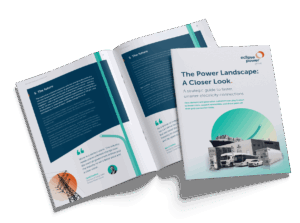
To help answer that, we’ve brought together our latest thinking in a new insights report, The Power Landscape: A Closer Look. It explores how grid access, connection models, costs, and risk are shifting — and what that means for project strategy in the years ahead.
If grid access, connection costs, or network constraints are influencing your project or portfolio decisions, this report is designed for you.